
Apex Family Dentist Explains the Oral Health Issues Seniors Face

, by

Despite the fact that oral health is an important part of an older person’s well-being, it is often overlooked. Our family dentist in Apex knows that arthritis and neurological conditions can make it difficult for people to brush and floss their teeth. Below are some of the most common dental issues for seniors:

Cavities

Children are not the only ones who develop tooth decay. This condition is very common in people who are over the age of 65. It is estimated that 92 percent of people who are over the age of 65 have cavities. A person’s chance of developing cavities increases as he or she gets older because many people do not get annual dental exams.

This is why many cavities go untreated. It is important for older people to see a family dentist in Apex, so that cavities can be treated within a timely manner. Regular dental exams can also help prevent other dental issues for seniors.

Eating Problems

Cavities, poor-fitting dentures, missing teeth and gum disease can make it difficult for seniors to eat. Many seniors are forced to adjust their diet because of this problem.

Dry Mouth

The medical term for dry mouth is xerostomia. It is estimated that one out of five seniors suffer from dry mouth. Many seniors are on a several types of medications to treat chronic conditions. Muscle relaxers, antidepressants, blood pressure medications and antihistamines can cause dry mouth. Dentists recommend drinking plenty of fluids in order to combat dry mouth. You should also inform your dentist if you suspect that your medications are causing dry mouth.

Gum Disease

Gum disease is a condition where the gums are infected and inflamed. It can occur at any age, but it has a tendency to worsen as a person gets older. Many people do not have any pain during their early stages. However, people who have advanced gum disease may experience pain while they are chewing. They may also have sore gums.

Gum disease is typically brought on by poor oral hygiene. If plaque is not removed, then it will harden and form tartar. A professional cleaning is required to remove tartar. Periodontitis and gingivitis are the two forms of gum disease. Gingivitis causes the gums to bleed, swell and become red. Periodontitis causes the gums to separate from the teeth. Annual dental exams, flossing and brushing can prevent gum disease.

If you’re unsure how long it has been since visiting your local dentist office or you may have some dental or tooth pain, please get in touch with our Apex family dentist today for an appointment.
 

“What are Those Things?”: Common Dental Tools Used by Our Apex Dentists

, by

“What is that?” That’s a question we hear at our Apex dentist office quite often. And it’s understandable—having a dangerous-looking implement inserted into your mouth can be pretty scary, especially for people who have a dental phobia. If you are nervous about going to the dentist, knowing beforehand what the tools are and what they do can help calm your anxiety. Keep reading to learn about some of the most common tools our Apex dentist uses. 

Mouth Mirror

Probably the most recognizable dental instrument, the mouth mirror isn’t just used to look at your teeth; it’s also often used to retract the patient’s cheeks to the dentist a better look.

Dental Explorer

Many patients fear the dental explorer, which resembles a hook with a pointy end. Although this device may look like has an evil purpose, it’s only used to tap around suspect areas of enamel. If the explorer “sticks” in a certain spot, your dentist or hygienist can tell that tooth decay is present. If it doesn’t, your enamel is strong and healthy.

Periodontal Probe

This instrument is a tiny rod with small markings on it, spaced one millimeter apart. Some patients have remarked that it looks a little bit like a mosquito leg. The periodontal probe is used to measure bone loss around the tooth (periodontitis). The dentist or hygienist carefully slides the probe down into the space between the tooth and the gum, and the deeper the instrument goes, the more bone loss is present. Generally, healthy teeth will measure around one to three millimeters. If a four-millimeter pocket is noted, it could be an indication of gingivitis, the earliest stage of gum disease. Anything higher than that suggests periodontitis.

Cotton Pliers

Cotton pliers are another rather wicked-looking implement whose purpose is quite benign. The cotton pliers are essentially just long-handled tweezers, bent at a small angle for greater accuracy and precision when placing, you guessed it, rolls of cotton. 

Spoon Excavator

A spoon excavator has a long handle and a flat, rounded end, shaped somewhat like a spoon. It is most commonly used to remove decay or debris, although it can also be used for many other tasks, such as shaping composite resin.

Saliva Ejector

You probably know the saliva ejector as the “spit sucker.” This little disposable tube uses suction to keep water, saliva, and other debris out of the back of the throat during a procedure.

Contact Our Apex Dentist Office Today! 

Whether you need a simple tooth cleaning or an important restorative procedure, Hansen Dentistry is here to help you every step of the way. Our Apex dentist, Dr. Hansen, and his amazing staff go above and beyond to help our patients feel relaxed and comfortable in the dentist’s chair. If you have any questions about a certain procedure or the tools we use, we will be more than happy to answer. To request an appointment with our office, click here to fill out our easy contact form

Learn the Parts of the Teeth from Our Apex NC Family Dentist!

, by

While the mouth is just a small part of our overall anatomy, it’s responsible for some of the most important things we do—eating, drinking, speaking, and making facial expressions! In today’s blog, our family dentist in Apex explains the different parts of the teeth, including the enamel, dentin, pulp, and miscellaneous tissues.

Enamel

The outer covering of the tooth, enamel is the strongest, hardest, and most highly-mineralized substance in your body. Enamel is also the most visible part of teeth, a semi-translucent material that ranges in color from light yellow to grayish-white. Enamel does not contain any living cells, and cannot regenerate itself, so it’s critical to preserve it. Proper oral hygiene – brushing, flossing, regular professional checkups and cleanings – help to keep your enamel from eroding away.

Dentin

Dentin is a layer of living cells that lies underneath the tooth enamel. Dentin is also what primarily gives your teeth their color. This is why people who scour their teeth with harsh, abrasive substances like charcoal or baking soda often wind up with yellower teeth than they started out with. Since the white enamel has been worn away, the yellow dentin shows through. That’s why it’s best to stick to safe, professional whitening treatments!

Dental Pulp

Pulp is the living center of your teeth, filled with blood vessels, connective tissue, and nerves. Pulp’s role is to keeps your teeth nourished and moist. Without pulp, our teeth would resemble dried, bleached bones, just like the turkey wishbone that you leave out for a few days after Thanksgiving.

Other Parts of the Tooth and Jaw

Teeth are held in place by the cementum, a layer of connective tissue that grips teeth to the gums and jawbone, and the Periodontal ligament, which helps hold the teeth to the jaw. You also (hopefully!) have gums, upper and lower jaws, a tongue, salivary glands, a uvula (the dangly ball bit at the back of your mouth), and a frenulum linguae (the tissue under your tongue). All of these structures, except your teeth, are covered by a protective lining called the oral mucosa, similar to the mucous membranes inside your nose and inner ears.

The health of all these structures are directly related to the health of your teeth. Your mouth is a holistic system, and if one part of it is not well, other parts will also suffer.

Take Care of Your Mouth with our Apex NC Dentists!

Thankfully, teeth can typically be kept healthy and happy with basic oral hygiene and twice-yearly dentist appointments. Regular exams and professional teeth cleanings help your dentist screen you for oral cancer, tooth decay, and gum disease. If you’re searching for dentists in Apex or Cary, contact Hansen Dentistry today!

Teeth and Sugar: Dispelling the Top 5 Dental Myths with our Dentist in Apex NC

, by

Teeth and Sugar: Dispelling the Top 5 Dental Myths

You’ve heard it since you were a small child: the #1 greatest threat to your teeth is sugar. Turns out, though, there are other things that damage our teeth just as much, and cutting out sugar isn’t always enough to guarantee total tooth health. Here are some of the most common misconceptions people have when it comes to sugar, teeth, and cavities.

Misconception 1: Sipping on one soda throughout the morning isn’t as dangerous as, say, eating 4 frosted donuts in one sitting.  

The truth: It’s actually much worse to expose your teeth to small amounts of sugar throughout the day, than to eat a high-sugar item in one go. It’s the frequency of sugar consumption that damages your teeth, not the amount. If you ate an entire tub of icing in a minute, we’re not saying it would do your body any favors; but your teeth would likely be fine, as the icing would only touch them for 60 seconds or so. Spending four hours working your way through a coke, however, exposes your teeth to an almost constant wash of acid.

Misconception 2: Sugar is bad for my teeth, but carbs aren’t. If I switch to unfrosted mini-wheats for breakfast, my teeth will be fine.

The truth: Simple carbohydrates are actually just as bad for teeth as sugar. That’s because it isn’t really sugar or carbs which are the culprits for cavities; those just happen to be the favorite foods of the bacteria that live in your mouth. Bacteria just love carbs and sugar, and once they’re done chowing down, they convert it into lactic acid, the stuff that erodes your teeth and creates cavities. Therefore, eating a bowl of crackers at your desk hurts your teeth as much as eating a bowl of candy.

Misconception 3: Drinking my coffee black might stain my teeth, but it won’t hurt the enamel.  

The truth: Drinking your coffee black will still damage your teeth, because it is extremely high in acid. Remember that the bacteria in your mouth eat the sugar and then convert it into acid. Black coffee by itself already is an acid, so nixing the sugar isn’t making things much better. (If you can’t kick your coffee habit, drinking it through a straw can help save your teeth from damage and staining.)

Misconception 4: Drinking sugar-free soda, or soda alternatives like LaCroix, will not hurt my teeth.

The truth: Carbonation can badly damage your enamel. Soda water’s pH is around 3 or 4, depending on the brand, making it around 100 to 1000 times more acidic than water. With that said, drinking soda water is better than drinking straight soda, and is often a good middle step to eventually going totally soda-free.

Take care of your teeth with Hansen Dentistry, your local Apex dentist office.

Whether you need preventative dentistry, cosmetic dentistry, oral surgery, or something else, Hansen Dentistry is here to help. Our Apex dentist office is a welcoming, family-friendly, judgement free zone where we only care about one thing: helping you have the healthiest smile possible! To schedule an appointment, fill out our appointment form here.

Is Sparkling Water Bad for Your Teeth? Ask an Apex Dentist

, by

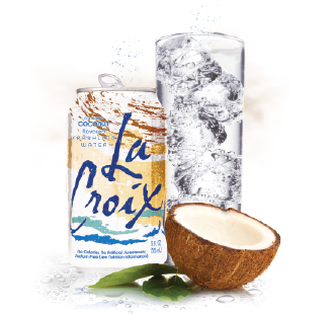
We have been asked this question a lot lately, maybe because it is summer and people are looking for a cold refreshing alternative to water that is not soda or juice.  I mean, who doesn’t love a Coconut La Croix every now and then!?!

 Unfortunately the answer is: True.

The problem is that the CO2 that gives sparking water its fizziness is converted to carbonic acid in your mouth.  This acid lowers the pH level and while buffers in our saliva work to neutralize pH levels, the process is slow.

What happens in a mouth with a reduced pH level?  Teeth are demineralized.  In other words, the hard enamel that protects the soft inner part of your teeth (dentin) literally looses some of the minerals that make it hard.  When the enamel is soft, dental erosion occurs…even in the absence of sugar. Adding sugar to the equation creates even more of a problem.  This is because your teeth are not only at risk for erosion, but decay also.  So while sparkling water is worse for your teeth than regular water, it is not as bad as non-diet soda.

One important factor to consider is the length of exposure.  If you pop open a can of

La Croix and drink it with a meal over a 15 minute time period, that is not so bad. Swishing with a mouthful of regular water when you are done makes it even better. However, if you sip on that same size can, without food, for over an hour, the exposure time is much higher.  Your saliva just can’t keep up and so more erosion will occur.

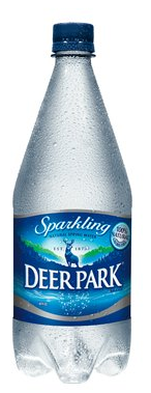
deer-parkBottomline:  The best thing you can drink is water.

When you drink other beverages, try to consume over a shorter duration of time, rather than sipping throughout the day.  If you drink something acidic, don’t brush right away, as the enamel is soft and you will be literally brushing away your teeth!  Instead, rinse with water and brush with fluoride toothpaste an hour later.

The goal of this post is not to say that sparkling water is horrible and you should never drink it.  After all it is a more “natural” alternative to soda and does not have any sugar. However, when a bottle of sparkling water looks almost identical to a regular bottle of water it can be hard to tell if there is any difference.  And it is important to understand the difference so that we can enjoy these beverages and then take the necessary steps to keep our teeth healthy and strong!

Cheers!